
Main Players
- Blood Glucose: The main form of energy. We get it from the foods we eat.
- Pancreas: Produces insulin, a messenger that regulates how blood glucose will act in different cells.
- Cells (Fat, Liver, Muscle): After being instructed by insulin, they uptake glucose from the blood to use it for energy or store it for later use.

In details:
Under normal circumstances, our body breaks down the food we eat into glucose (sugar), the body’s primary energy source.
Glucose enters the bloodstream, which signals the pancreas to release insulin.
Insulin helps glucose in our blood enter our muscle, fat, and liver cells so they can use it for energy or store it for later use.
When glucose enters our cells and the levels in the bloodstream decrease, it signals our pancreas to stop producing insulin!
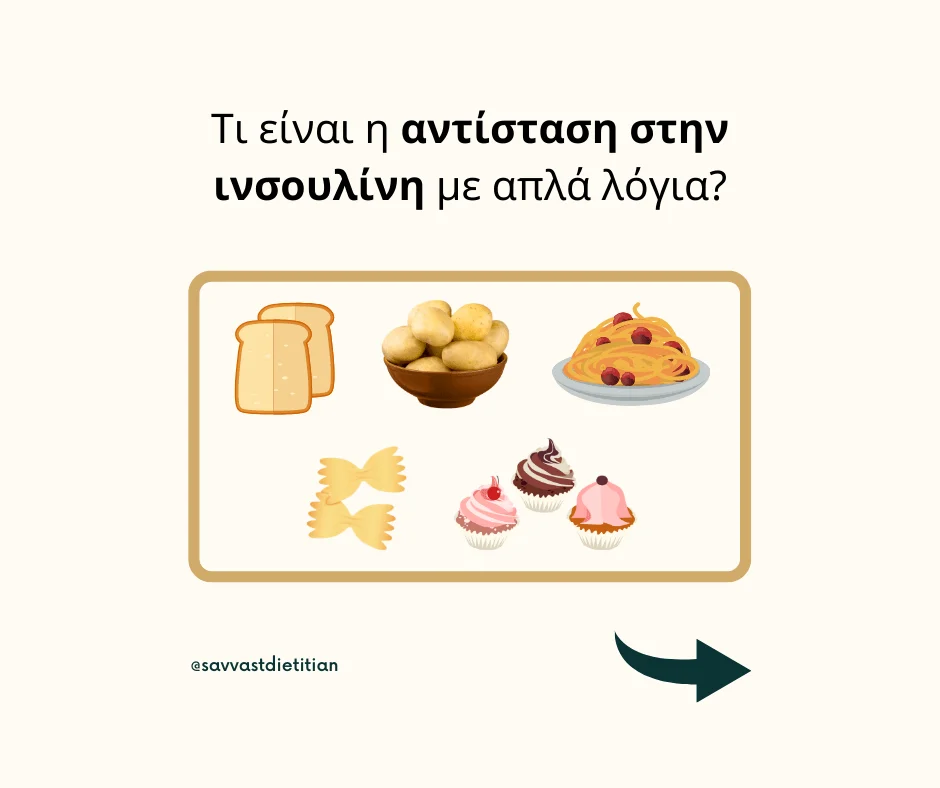
For several reasons, our muscle, fat, and liver cells can respond inappropriately to insulin, which means they can’t efficiently take up glucose from the blood or store it. This is insulin resistance
As a result, the pancreas makes more insulin to overcome increasing blood glucose levels. This is called hyperinsulinemia.
As long as the pancreas can make enough insulin to overcome the cells’ weak response to insulin, our blood sugar levels will stay in a healthy range.
If cells become too resistant to insulin, it leads to elevated blood glucose levels (hyperglycemia), leading to prediabetes and Type 2 diabetes over time.
What are the main reasons for insulin resistance?
- Being in a daily caloric surplus.
- Physical inactivity.
- Having imbalances in the gut microbiome.
- A deficiency in micronutrients like Chromium, Zinc, Magnesium, and especially B vitamins.
- Being chronically stressed. Excess cortisol can counteract the effects of insulin, causing insulin resistance.
Practices that could help you:
- Prioritizing on losing excess weight.
- Focusing on a low-carb diet plan.
- Incorporating fasting protocols (if well tolerated).
- Engaging in some form of physical activity.
- Emphasizing getting all the micronutrients from your diet.
- Working on your gut health since the gut microbiome is linked to insulin resistance.
- Working on your stress levels and engaging in good sleeping patterns.